I-180S
OLD‑WIKI.WARTHUNDER.COM (DEFUNCT)
Description
The I-180S was an attempt by the Polikarpov Design Bureau to extract more performance out of the I-16's airframe. The aircraft had a troubled development, including the death of one of its test pilots in a prototype. The aircraft was meant to fulfil the requirements for a new interceptor with a radial engine. The aircraft suffered problems with the engines and the propeller, being armed with a set of 2 x 12.7 mm Berezin BS and 2 x 7.62 mm ShKAS machine guns over the engine. The cancellation of the I-180S is attributed by some historians to the intentions of promoting younger designers over Polikarpov, as well as favouritism in the high spheres of influence of the Soviet Union.
It was introduced during Update 1.87 "Locked On" as a reward for the 2019 "Battlefield Engineer" event. The I-180S is very similar visually to the I-16 and its many variants. It could even be considered a faster version of it, since its creation was with the idea of using the I-16 as a basis for a more powerful fighter. The I-180 may lack the adequate weaponry compared to many fighters around its BR that already fit 20 mm or even 30 mm cannons. However, the I-180 compensates this with outstanding flight performance, the acceleration is nothing too special but it has a very good top speed, climb rate, and turn rate. This means that it can get into good positions since the start of the match, and even intercept bombers flying at high altitudes without much problem.
General info
Flight performance
The I-180S is a quite a manoeuvrable aircraft at its BR, being able to turn better than many fighters of its tier.
| Characteristics | Max Speed (km/h at 6,500 m) |
Max altitude (metres) |
Turn time (seconds) |
Rate of climb (metres/second) |
Take-off run (metres) | |||
|---|---|---|---|---|---|---|---|---|
| AB | RB | AB | RB | AB | RB | |||
| Stock | 565 | 547 | 19.5 | 20.6 | 12.6 | 12.6 | 350 | |
| Upgraded | 607 | 585 | 18.5 | 19.0 | 21.5 | 16.6 | ||
Details
| Features | ||||
|---|---|---|---|---|
| Combat flaps | Take-off flaps | Landing flaps | Air brakes | Arrestor gear |
| X | ✓ | ✓ | X | X |
| Limits | ||||||
|---|---|---|---|---|---|---|
| Wings (km/h) | Gear (km/h) | Flaps (km/h) | Max Static G | |||
| Combat | Take-off | Landing | + | - | ||
| N/A | 362 | 250 | ~12 | ~6 | ||
| Optimal velocities (km/h) | |||
|---|---|---|---|
| Ailerons | Rudder | Elevators | Radiator |
| < 300 | < 240 | < 300 | > 190 |
Survivability and armour
- 8 mm Steel - Pilot seat
- Large, single fuel tank in front of pilot
- Uncovered cockpit (no cockpit roof)
Modifications and economy
Armaments
Offensive armament
The I-180S is armed with:
- 2 x 12.7 mm Berezin UB machine guns, nose-mounted (220 rpg = 440 total)
- 2 x 7.62 mm ShKAS machine guns, nose-mounted (650 rpg = 1,300 total)
Suspended armament
The I-180S can be outfitted with the following ordnance:
- Without load
- 4 x 50 kg FAB-50sv bombs (200 kg total)
- 2 x 100 kg FAB-100sv bombs (200 kg total)
Usage in battles
You can climb to about 4,000-5,000 m of altitude at the beginning of the battle and use Boom & Zoom tactic to get rid of some low-altitude enemies first. If there are any enemies above or at the same altitude as you, it is recommended to attempt to drag them into a dogfight. Head-on attacks are ill-advised against heavily armed and armoured planes such as the F4U Corsair, P-40 Warhawk, and Fw 190 because the I-180S lacks armour around many critical components, including the pilot and fuel tank. The I-180S's armament seems to push the nose up a small amount, but good aim prevents this from being that much of an issue.
Although the I-180S is fairly manoeuvrable, there are some aircraft which can easily outturn it such as the British Spitfire and Japanese A6M Zero. Both of these fighter types have an excellent turn rate which means that dogfighting, even against a mediocre pilot, will most likely result in them getting on your tail. A recommended strategy to combat these types is to try to gain an altitude advantage or do a head-on with a quick snap-turn to out-run them and return for another pass.
In RB/SB modes, the I-180S has a nasty habit of entering stalls at low speeds, especially when turnfighting with manual rudder and elevator controls - at which point, it falls like a rock for a few hundred metres. Daring pilots may be able to use this to their advantage to throw off pursuing planes, but be careful not to end up crashing.
Manual Engine Control
| MEC elements | ||||||
|---|---|---|---|---|---|---|
| Mixer | Pitch | Radiator | Supercharger | Turbocharger | ||
| Oil | Water | Type | ||||
| Controllable | Controllable Not auto controlled |
Controllable Not auto controlled |
Controllable Not auto controlled |
Separate | Controllable 2 gears |
Not controllable |
- Manual activation
- For those who manually activate the gearing, switch to second gear around 3,500 m and drop the drop climb angle to 10-12 degrees which will make most effective use of the aircraft's engine and supercharger.
Pros and cons
Pros:
- Great all-round fighter, a bit of turn fighter, a bit of Boom & Zoomer
- Excellent climb rate due to supercharger
- Small size means small target
- Great manoeuvrability
- Great roll rate
- Excellent armament packed tightly in the nose of the aircraft, making it easy to aim
- Can carry bombs for ground attack
Cons:
- Engine tends to overheat, must be careful with WEP
- Poor rudder control, difficult to perform wing-overs or hammerhead manoeuvres
- Underarmoured for its tier
- Damage to the wings, control surfaces, or engine modules can unbalance the aircraft and or cripple performance
History
Development of the I-180 began in 1938, with the Polikarpov design bureau starting work on creating a new aircraft to meet the requirements of the Soviet Air Force at the time. In order to do so, engineers decided to base the new machine on a modified I-16 design and to install a more powerful radial engine. As a result, the I-180 was created. However, development and testing of prototypes was plagued with numerous issues, including many accidents. This, coupled with the arrival of new Soviet fighter designs quickly cast a shadow on the I-180 project which ultimately led to the project being cancelled by the end of 1940. Prior to the cancellation, a production version of the machine - the I-180S was built but only in very limited numbers. In total, around 13 I-180s were built, including prototypes, but none saw any active service.
- From Devblog
Media
- Skins
- Images
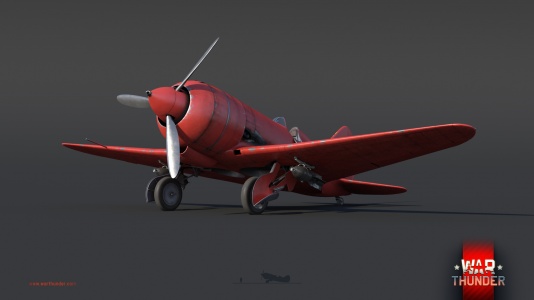
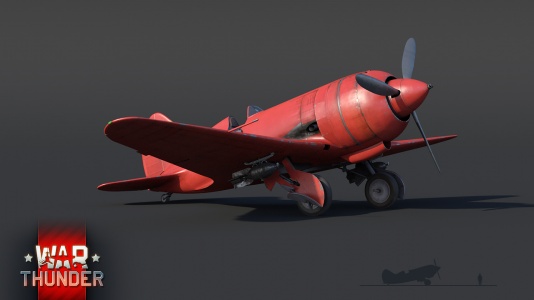
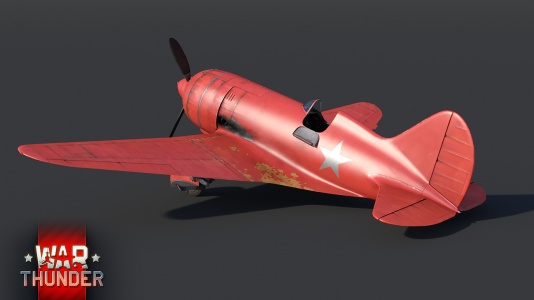
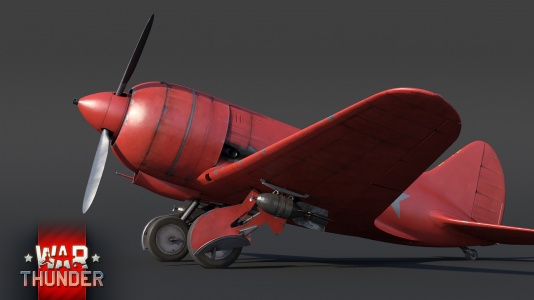
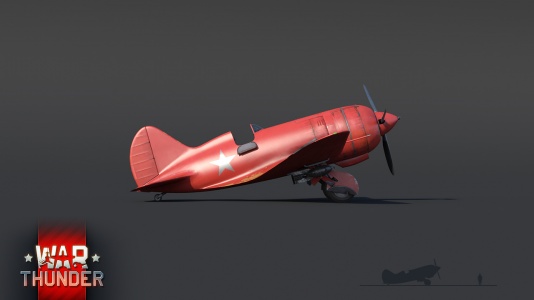
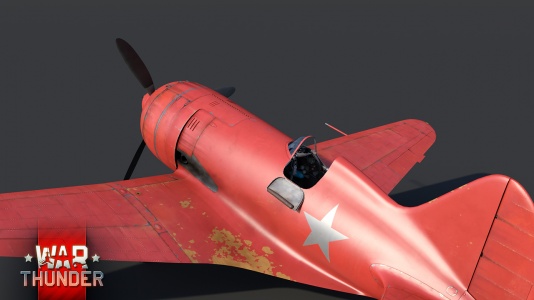
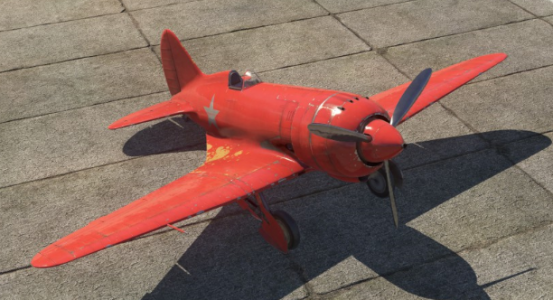
The standard livery is mainly red, with some items in shiny silver.
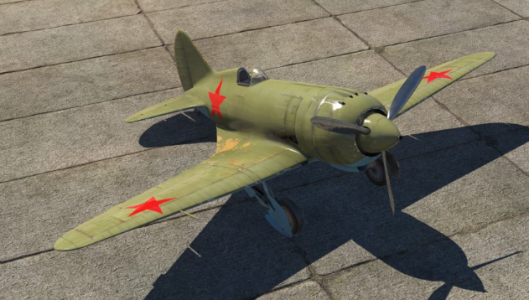
Summer livery, with red stars on the classic Soviet green and blue camouflage.
- Videos
See also
Links to the articles on the War Thunder Wiki that you think will be useful for the reader, for example:
- reference to the series of the aircraft;
- links to approximate analogues of other nations and research trees.
External links
| Polikarpov Design Bureau (Опытное конструкторское бюро Поликарпова) | |
|---|---|
| I-15 | I-15 WR · I-15 M-22 · I-15 M-25 · I-15bis · Krasnolutsky's I-15bis |
| I-153 | I-153 M-62 · Zhukovsky's I-153-M62 · I-153P |
| I-16 | I-16 type 5 · I-16 type 10 · I-16 type 18 · I-16 type 24 · I-16 type 27 · I-16 type 28 |
| I-180 | I-180S · I-185 (M-71) · I-185 (M-82) |
| ITP | ITP (M-1) |
| Twin-engine fighters | TIS MA |
| Bombers | Po-2 · Po-2M |
| Export | ␗I-15bis · ␗I-153 M-62 · ␗I-16 type 5 · ␗I-16 type 10 · ␗I-16 type 17 · ␗I-16 Chung 28 |
| USSR fighters | |
|---|---|
| I-15 | I-15 WR · I-15 M-22 · I-15 M-25 · I-15bis · Krasnolutsky's I-15bis |
| I-153 M-62 · Zhukovsky's I-153-M62 · I-153P | |
| I-16 | I-16 type 5 · I-16 type 10 · I-16 type 18 · I-16 type 24 · I-16 type 27 · I-16 type 28 · I-180S |
| I-29 | I-29 |
| I-185 | I-185 (M-71) · I-185 (M-82) |
| I-225 | I-225 |
| ITP | ITP (M-1) |
| MiG-3 | MiG-3-15 · MiG-3-15 (BK) · MiG-3-34 |
| LaGG | I-301 · LaGG-3-4 · LaGG-3-8 · LaGG-3-11 · LaGG-3-23 · LaGG-3-34 · LaGG-3-35 · LaGG-3-66 |
| La | La-5 · La-5F · La-5FN · La-7 · Dolgushin's La-7 · La-7B-20 · La-9 · La-11 |
| Yak-1/7 | Yak-1 · Yak-1B · Yak-7B |
| Yak-3 | Yak-3 · Eremin's Yak-3(e) · Yak-3P · Yak-3T · Yak-3U · Yak-3 (VK-107) |
| Yak-9 | Yak-9 · Yak-9B · Golovachev's Yak-9M · Yak-9T · Yak-9K · Yak-9U · Yak-9UT · Yak-9P |
| Other countries | ▂P-40E-1 · ▂P-47D-27 · ▂Hurricane Mk IIB · ▂Fw 190 D-9 · ▂Spitfire Mk IXc |
| P-39 | ▂P-39K-1 · ▂Pokryshkin's P-39N-0 · ▂P-39Q-15 |
| P-63 | ▂P-63A-5 · ▂P-63A-10 · ▂P-63C-5 |
| USSR premium aircraft | |
|---|---|
| Fighters | Krasnolutsky's I-15bis · I-16 type 28 · Zhukovsky's I-153-M62 · I-153P · I-180S · I-301 · ITP (M-1) |
| LaGG-3-4 · LaGG-3-23 · LaGG-3-34 · Dolgushin's La-7 · La-11 | |
| Eremin's Yak-3(e) · Yak-3 (VK-107) · Yak-3T · Golovachev's Yak-9M | |
| ▂P-39K-1 · ▂Pokryshkin's P-39N-0 · ▂P-39Q-15 · ▂P-40E-1 · ▂P-47D-27 · ▂P-63A-5 · ▂P-63A-10 · ▂P-63C-5 | |
| ▂Hurricane Mk IIB · ▂Spitfire Mk IXc · ▂Fw 190 D-9 | |
| Twin-engine fighters | I-29 |
| Jet fighters | Su-11 · MiG-15bis ISh · MiG-17AS · MiG-21S (R-13-300) · MiG-23ML |
| Strike aircraft | IL-2M "Avenger" · IL-2 M-82 · IL-8 (1944) · Su-6 · Tandem MAI · TIS MA · Su-8 · Tu-1 |
| Yak-38 · Su-7BMK · Su-25K · Su-39 | |
| Bombers | Po-2M · Be-6 · MBR-2-M-34 · Pe-2-205 · TB-3M-17-32 |
| ▂PBY-5A Catalina · ▂Hampden TB Mk I · ▂A-20G-30 · ▂B-25J-30 | |